

Quick Summary
Payroll outsourcing lets businesses handle a tricky and time-consuming task better. Outsourcing helps with payroll as it gets more complex. This is especially true for growing companies and those with employees in multiple states. It offers structure, expertise, and peace of mind.
At a high level, payroll outsourcing helps businesses:
- Reduce administrative time and repetitive manual work
- Improve payroll accuracy and pay employees on time
- Stay compliant with evolving tax and labor regulations
- Access modern payroll technology and expert support
- Scale payroll operations as the business grows
PrimePay combines technology and payroll expertise to help employers make payroll a reliable, well-managed process instead of a recurring headache.
The Power of Outsourcing Payroll
Payroll is one of those business functions that seems straightforward…until it isn’t. As companies grow, regulations change, and workforces become more complex. Payroll becomes a time-consuming and risky task.
That’s why employers, big and small, choose payroll outsourcing. In fact, a 2024 report shows that nearly three-quarters (73%) of organizations outsource at least part of their payroll.
The reason is that by outsourcing payroll, businesses can:
- Save time and reduce administrative burden
- Ensure payroll compliance and mitigate payroll-related risks
- Improve payroll accuracy and reduce errors
- Gain cost savings even beyond the obvious
- Access both advanced payroll technology and payroll expertise
- Enhance security and protect against fraud
- Scale with growth
- Boost employee satisfaction, trust, and experience
This guide explains how payroll outsourcing works and when it’s right for your business.
What is Payroll Outsourcing?
Payroll outsourcing is the practice of hiring a third-party provider to manage some or all payroll responsibilities on your behalf. This typically includes:
- Employee wages
- Tax withholdings
- Direct deposits
- Compliance with federal, state, and local rules
Businesses often choose to outsource payroll instead of managing payroll in-house. This way HR, or finance teams don’t have to keep up with filing deadlines, rule changes, and payroll details. Instead, they can rely on specialists who focus solely on payroll processing.
Payroll outsourcing is not one-size-fits-all. Some providers offer basic processing support. Others provide full-service payroll solutions. These include tax filing, benefits administration, and compliance monitoring. Knowing your payroll challenges now and in the future is essential. This helps you select the right support level and get the best mix of outsourcing benefits.
Why Do Businesses Outsource Payroll?
For many employers, payroll outsourcing starts as a response to growing complexity. As a business grows by adding employees, entering new states, or dealing with various regulations, what once felt manageable can quickly feel overwhelming. Multi-state payroll adds many tax rules, filing schedules, and reporting duties. These can be hard to manage without expert help. Small business payroll teams often feel stretched. This makes missed deadlines and costly errors more likely.
As payroll become more complex, cost is just one factor in the choice to outsource. “Organizations don’t [just] outsource to lower cost,” Deloitte found in its 2024 report. “It’s typically to decrease risk, avoid building the capability in-house because it’s hard to manage, or because of technology limitations.”
Top Benefits of Outsourcing Payroll
There are many benefits to hiring outside experts to handle your payroll. Below is a brief overview of seven benefits.
1. Time Savings and Reduced Administrative Burden
Payroll has a way of quietly consuming far more time than most organizations expect. On the surface, it appears to be a recurring task that happens once or twice a month. In reality, it pulls HR, finance, and business owners into a steady cycle of preparation, verification, corrections, and follow-up.
Research shows that payroll teams spend more than 25% of their time running payroll. That figure doesn’t include the time spent on employee questions, correcting errors, or re-entering data. Manually entering payroll inputs alone is the single most time-consuming part of payroll processing, followed closely by entering adjustments and reconciling inputs.
Outsourcing payroll removes much of this repetitive, manual work from internal teams. Organizations can skip the hassle of spreadsheets, timecards, and exception reports. They can trust established processes that ensure payroll accuracy and efficiency.
The result is not just time saved, but mental bandwidth reclaimed. HR and finance leaders can focus on workforce planning, financial strategy, and business execution. This shift allows them to spend less time on payroll cycles and data management.
2. Payroll Compliance and Risk Mitigation
Navigating the complexities of tax laws and regulations is challenging. In fact, NFIB Research Center reports that “four of the top ten most burdensome issues for small business owners are tax-related.”
That’s why many companies benefit from outsourcing their payroll. They’re hiring payroll talent with expertise in these laws, so they don’t need to know the ins and outs. Plus, professional payroll providers stay updated on federal and state rules. This helps them make accurate calculations and file on time. The result? Fewer errors and penalities to worry about.
3. Improved Payroll Accuracy and Fewer Errors
Surveys show that between 32% and 44% of employees have noticed paycheck errors. Worse, nearly half of those who have noticed an error say those mistakes are frequent. Each and every error then compounds the time spent on payroll. 41% of payroll teams end up spending an extra four to ten hours every payroll cycle just correcting hours!
The operational cost of those mistakes adds up quickly, too. Employers make an average of 15 payroll corrections per pay period. Incorrect or missing time punches alone can cost nearly $78,700 per 1,000 employees each year. Corrections lead to more than just direct costs. They cause issues like amended filings, manual adjustments, and strained employee relations.
Outsourcing payroll improves accuracy by standardizing processes and layering automation with experienced review. Payroll providers use consistent calculation logic, validation checks, and controls. This approach is better than relying on scattered spreadsheets and systems for each pay cycle. Outsourcing helps break that cycle by getting payroll right the first time.
4. Cost Savings and Opportunities Beyond the Obvious
Outsourcing payroll can save money across the top. In fact, employers save 18% on average by outsourcing payroll. Outsourcing can cut down on administrative work and remove the need for in-house payroll systems. It also reduces the risk of fines. However, its financial effects go beyond just simple cost comparisons.
Payroll also leads to extra costs. This includes time spent on corrections, checking compliance, and maintaining technology. HR and finance leaders also face opportunity costs when they shift from high-value work to fix payroll issues. Dealing with those issues could be automated, streamlined, or outsourced instead.
Consequently, it’s just as important to consider what outsourcing enables. Removing repetitive payroll tasks helps businesses grow. It also improves customer experience and boosts strategic planning. Outsourcing payroll saves money. It also helps the business use time and talent more efficiently.
5. Access to Advanced Technology and Payroll Expertise
According to Deloitte’s 2024 payroll survey, “Technology limitations are the most pressing service delivery issues which respondents face [in payroll].”
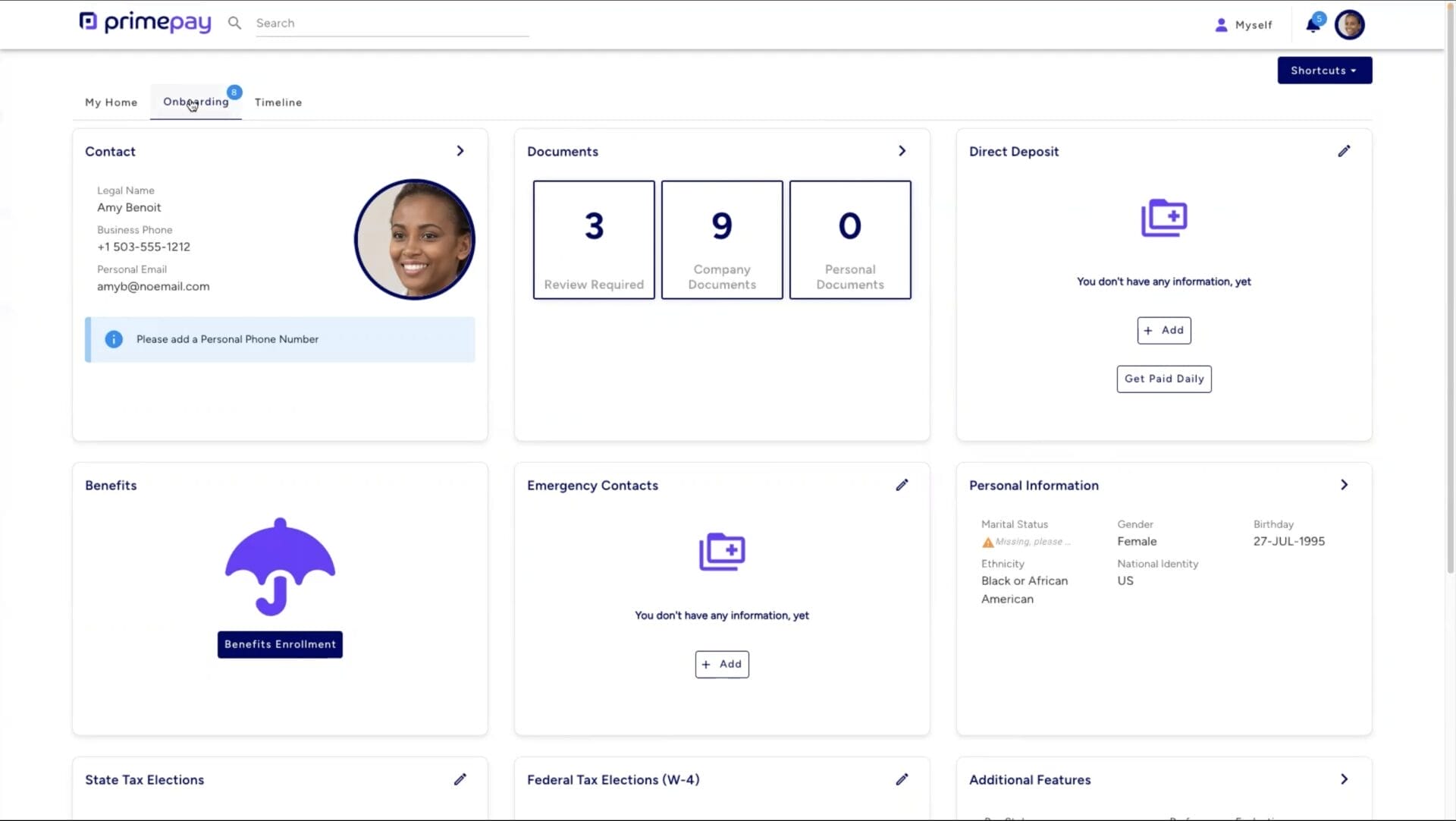
Outsourcing bridges the gap. It connects modern systems with payroll experts who know how to use them well. Employers can use advanced payroll technology without making big upfront investments. Cloud platforms provide secure, instant access to payroll data from anywhere. This supports remote work and helps speed up decision-making. Advanced providers offer AI-driven analytics. These tools help employers understand labor costs, spot trends, and plan better.
Integration is another major advantage. Payroll systems that connect seamlessly with HR, time and attendance, and benefits platforms reduce duplicate data entry. This also improves consistency across records. Self-service portals further enhance transparency by allowing employees to access pay stubs, tax forms, and personal information without HR intervention.
6. Enhanced Security and Fraud Protection
Keeping employee information safe is paramount. Unfortunately, many companies that run their payroll in-house aren’t set up to fight fraud and scam attempts. In fact, these types of intrusion campaigns (AKA fraud and scam attempts) have increased 35% the past year. So, your payroll security should be a top priority for your business.
Many third-party providers implement robust encryption and security protocols to safeguard information. Plus, professional payroll services have checks and balances in place to detect and prevent internal and external fraudulent activities.
Outsourcing also introduces protections to reduce the risk of internal fraud. It’s easier to enforce segregation of duties, approval workflows, and anomaly detection in a dedicated payroll environment. In small internal teams, responsibilities often overlap, making this harder. For many employers, these protections alone justify the move to a third-party provider.
7. Scalability for Growing Businesses
Growth is often what pushes payroll systems past their breaking point. Hiring accelerates, pay structures diversify, and geographic expansion introduces new regulatory obligations. What works for ten people quickly becomes too much for fifty or one hundred employees.
Payroll outsourcing supports growth without forcing businesses to rebuild processes every time they expand. Providers are designed to handle workforce changes, new locations, and evolving compensation models without adding internal headcount or complexity. Outsourced payroll easily adapts when a business adds contractors, opens new offices, or faces seasonal workforce changes.
This flexibility allows leaders to focus on growth opportunities. They don’t have to worry about whether payroll infrastructure can keep up.
8. Improved Employee Satisfaction and Trust
Here’s a chilling fact: “Payroll issues have damaged trust for 21% of employees, and more than half say repeated mistakes would push them to consider leaving.”
For many workers, pay relates closely to their self-worth. It connects to how valued they feel in their organization. Even small issues can have a big emotional impact.
“At the beginning of my career, payroll was considered better not seen or heard unless something went wrong,” Tiffany Paquette, director of people technology and operations at Puma North America, told HR Executive. “Now, payroll teams are intricately woven into the employee experience, helping employees understand how and what they are being paid.”
Repeated payroll issues damage trust. Recent surveys show that payroll issues have eroded trust for more than one in five employees. More than half of them say ongoing mistakes would cause them to consider leaving. Reliable payroll, clear communication, and self-service access build trust and boost employee relationships.
Every organization claims to value its people. Payroll is where those claims are tested. Outsourcing payroll helps ensure that pay is accurate, on time, and easy to understand. This aligns everyday operations with the values employers want to show.
Who Should Consider Outsourcing Payroll?
Payroll outsourcing is not limited to companies of a certain size or industry. It is most valuable for organizations where payroll complexity, limited internal resources, or growth pressures. These factors can make in-house processing difficult to manage. The following types of businesses tend to benefit the most.
Small Businesses
Many small businesses have lean teams. Payroll duties often fall to owners, office managers, or overwhelmed HR and finance staff. In these environments, payroll can quickly become a distraction from core business priorities.
Unfortunately, most employers (63%) underestimate the time required to process payroll. As a result, they face last-minute scrambles, increased stress, and a higher risk of errors or delays. Worse, finance teams feel frustrated, overworked, and spread-thin.
Outsourcing payroll helps small businesses get expert support. They don’t need to hire or train staff. Small teams can skip hours of calculations, filings, and corrections each pay cycle. This lets them focus on growth, customer relationships, and daily tasks. They can also trust that payroll is accurate and compliant.
Growing and Multi-State Businesses
Growth introduces payroll complexity at a rapid pace. Adding employees or expanding into new states can stress in-house systems. These systems were not made to handle growth. Changing workforce structures can also create strain. Multi-state employers deal with much tougher compliance demands. Each state has its own tax rules, labor laws, and filing schedules.
Employers with multi-state workforces faces more payroll complexity. They also spend much more on payroll administration than those with employees in just one state. Errors in these settings can lead to serious financial losses. Penalties, corrections, and remediation costs can add up fast. For growing businesses, outsourcing payroll turns expansion into a planned launch. This way, you set up systems and compliance before issues come up.
Large or Complex Organizations
Larger organizations handle big payrolls. They have many pay structures and special needs like bonuses, commissions, and union agreements.
often manage high payroll volumes, multiple pay structures, and specialized requirements such as bonuses, commissions, or union agreements. Consistency and risk management become critical at this scale. Outsourcing payroll allows these organizations to standardize processes, reduce variability, and apply controls. These controls can be hard to maintain within large teams and across many locations.
Industries That Benefit the Most From Outsourcing Payroll
Some industries face payroll challenges that make outsourcing especially attractive:
- Restaurants and Hospitality: High turnover, tipped wages, overtime rules, and multi-unit operations create constant payroll complexity. Outsourcing ensures accurate calculations and compliance across locations.
- Healthcare: Shift differentials, contract workers, and state-specific regulations make healthcare payroll uniquely demanding. A payroll provider helps manage these nuances efficiently.
- Construction and Manufacturing: Job-based pay, union requirements, and certified payroll reporting introduce specialized compliance needs best handled by experts.
- Retail: Seasonal hiring and fluctuating hours require payroll systems that can scale quickly during peak periods.
- Technology and Startups: Fast-growing teams often prefer to stay lean. Payroll outsourcing removes administrative burdens so leaders can focus on innovation and growth.
For businesses in these categories, outsourcing payroll is less about convenience and more about maintaining accuracy, compliance, and operational stability as demands increase.
Common Myths About Outsourcing Payroll
Despite the clear benefits, some businesses hesitate to outsource payroll due to common misconceptions. Let’s debunk a few of them.
Myth 1: Outsourcing Payroll Means Losing Control
One of the most common concerns about payroll outsourcing is the fear of losing control. In practice, the opposite is usually true.
Outsourcing improves control. It reduces errors, helps with compliance, and gives employers real-time access to payroll data. This is done through secure, cloud-based platforms. The decision-making authority stays with the business, while execution becomes more reliable. It’s less like handing over the wheel and more like upgrading from a paper map to GPS. You still choose the destination, but you have better tools to avoid wrong turns along the way.
TIP: If you still want to run your own payroll and get the above control enhancements, research using payroll software with self-service capabilities. Choose a system that is easy to use and integrates with your time-tracking and HR technologies.
Myth 2: Payroll Outsourcing Is Only for Large Companies
Here too, the opposite is often true. Large organizations can foot the bill for expansive internal payroll teams. It’s smaller organizations where payroll obligations typically exceed capacity and capability. Running payroll in-house demands time, specialized knowledge, and constant attention to regulatory changes.
For smaller teams, those demands compete directly with strategic priorities. Outsourcing shifts that burden away, while also providing access to payroll technology and expertise that would otherwise be difficult or expensive to maintain internally, especially as the business grows.
Myth 3: Outsourcing Payroll Is Too Expensive
Many employers assume payroll outsourcing is too expensive. But this view often ignores the hidden costs of managing payroll in-house. Software licenses, ongoing training, compliance monitoring, and the time required to fix mistakes all add up.
Errors and missed deadlines can be particularly expensive. For example, the IRS charges penalties for late or incorrect payroll filings, which can result in significant fines. Consider the “failure to deposit penalty.” This is a percentage of the taxes not deposited on time, in the right amount, or in the right way. Outsourcing payroll can help control costs. It reduces risk, rework, and administrative overhead.
Choosing the Right Payroll Outsourcing Partner
Choosing the right payroll outsourcing partner is about more than processing paychecks. It’s about finding a provider that understands your business, anticipates compliance risks, and supports you as complexity grows. PrimePay combines modern payroll technology with experienced payroll professionals and ongoing support to help businesses operate with confidence.
By reducing avoidable payroll costs, improving accuracy, and managing regulatory requirements proactively, PrimePay helps employers turn payroll from a recurring headache into a reliable, well-managed function. The result is greater efficiency, lower risk, and more time to focus on what matters most: running and growing your business.
Payroll Outsourcing FAQs
What does payroll outsourcing typically include?
Payroll outsourcing usually covers core payroll processing tasks such as calculating wages, managing tax withholdings, issuing direct deposits, and filing payroll taxes.
Services may include:
- Year-end reporting
- Compliance monitoring
- Wage garnishment administration
- Employee self-service access to pay records
- And more
It all depends on the provider.
Some payroll outsourcing partners go further by integrating payroll with time and attendance, benefits administration, and HR systems. Support levels vary, so it’s key to know if you need basic processing or a full payroll solution.
Do I still have control over payroll if I outsource it?
Yes. Outsourcing payroll doesn’t mean you lose control. You still decide on pay, schedules, and approvals. Employers remain responsible for determining wages, compensation policies, and payroll timing. What changes is who handles execution.
Payroll outsourcing gives businesses better visibility. They can use dashboards, reporting tools, and access payroll data in real time. Leaders can confidently oversee payroll without the hassle of manual calculations and filings. This lets them focus on approvals and reviews, reducing distractions.
Is payroll outsourcing secure?
Reputable payroll outsourcing providers invest heavily in data security and fraud prevention. This includes encryption, role-based access controls, and secure data storage. It also features monitoring systems that protect sensitive employee and financial information.
Outsourcing often improves security for many small and midsize businesses. In-house payroll might have limited controls and overlapping duties. Payroll providers set up checks and balances. This helps lower the risk of external threats and internal payroll fraud.
How do I know if my business is ready to outsource payroll?
Businesses often turn to payroll outsourcing when it starts consuming too much internal time. They also outsource when errors become more frequent or compliance concerns increase. Growth is another common trigger. Adding new staff, opening more locations, or working in different states can make in-house processes more complex. If payroll is distracting owners, HR leaders, or finance teams from strategic tasks, it might be time to consider outsourcing. Staying compliant can feel risky, so exploring support options is wise.
How do I choose the right payroll outsourcing provider?
The right payroll outsourcing partner should offer more than software. Choose a provider that combines technology with skilled payroll experts. They should offer proactive compliance help and responsive service. Industry experience, scalability, and integration with existing systems all matter.
A partner like PrimePay helps businesses reduce avoidable payroll costs, improve accuracy, and manage compliance risk through a blend of modern tools and ongoing expert support. The goal is not just to run payroll, but to make it easier, safer, and more reliable over time.

Laura Davis is the Sr. Director of Business Support at PrimePay. She brings over 15 years of expertise in the payroll industry, leading a national payroll team through evolving compliance landscapes. Passionate about technology and innovation, Laura thrives on discovering ways to enhance client experiences and make payroll seamless and stress-free.
More from this Author