


Quick Summary
Payroll can seem overwhelming, but it becomes easily manageable when you follow a clear setup and repeatable process.
- Set up payroll accounts, employee data, and pay schedules first
- Follow a consistent process each pay cycle
- Maintain compliance with taxes and recordkeeping
From there, establishing a defined payroll strategy will help to reduce errors, improve efficiency, and support business growth over time.
Introduction
Most business owners don’t look forward to payroll. It can feel complicated, time-consuming, and full of rules that are easy to get wrong. But payroll is not optional. If you have employees, you need a reliable way to pay them accurately, withhold the right taxes, and stay compliant with federal, state, and local requirements.
The good news is that once you understand the process, payroll becomes far more manageable. With the right setup and a repeatable system, you can run payroll efficiently and avoid the common mistakes that cost businesses time and money.
It’s also important to recognize how many businesses are still figuring this out. Nearly half (42%) of small business employers handle payroll entirely in-house, often with spreadsheets or manual processes. The rest either use a payroll software provider or fully outsource.
In other words, a large portion of business owners are still directly responsible for payroll management, even if they use tools to help. And even if you choose to outsource, you still need a working understanding of how payroll functions. It is a core business process that affects employee trust, financial accuracy, and compliance risk.
At a high level, payroll includes three core responsibilities:
- Calculating employee pay based on hours worked or salary
- Withholding and remitting the correct taxes and deductions
- Maintaining accurate records and filing required posts
To do this effectively, you need to first set up payroll accounts and systems, then follow a consistent process each pay period.
This guide walks you through both sides of that equation. First, we will cover what you need to set up a payroll account properly. Then we will explain how to run payroll step by step, so you can build a payroll process that is accurate, repeatable, and compliant.
Payroll Setup Checklist: What You Need Before You Start
Before you can run payroll, you need to gather key information and make a few important decisions. Taking the time to prepare upfront will make the rest of the process much smoother and help you avoid compliance issues later.
Think of this as your payroll foundation. If these pieces are in place, it becomes much easier to set up a payroll account and manage ongoing payroll tasks.
Business identification details
Start with your basic business information. This includes your legal business name, address, and Employer Identification Number or EIN. If you do not already have an EIN, you will need to apply for one with the IRS before setting up payroll.
You may also need state-specific identification numbers, depending on where your business operates. These are used for state income tax withholding and unemployment insurance reporting.
State and local payroll registrations
Payroll is not just a federal requirement. Most businesses must also register with state and sometimes local tax agencies.
This typically includes:
- State income tax withholding accounts
- State unemployment insurance accounts
- Any applicable local tax registrations
Each state has its own requirements and processes, so it is important to confirm what applies to your location before you begin payroll management.
Business bank account for payroll
You will need a dedicated business bank account to fund payroll. This account is used to pay employees and remit payroll taxes.
Many businesses choose to keep payroll funds separate from their general operating account. This can make it easier to track cash flow, avoid errors, and ensure that payroll obligations are always covered.
Pay schedule and first pay date
Next, decide how often you will pay employees. Common pay schedules include weekly, bi-weekly, semimonthly, and monthly.
Your choice may be influenced by state laws, industry norms, and employee expectations. Once you select a schedule, set your first pay date and establish a consistent payroll calendar.
Consistency is critical. A predictable schedule helps employees plan their finances and makes it easier for you to run payroll on time.
Employee compensation details
You will also need to define how each employee is paid. This includes:
- Hourly wage or salary amounts
- Overtime eligibility and rates
- Bonus or commission structures
Make sure these details are clearly documented and aligned with wage and hour laws. Errors in compensation setup can lead to underpayments, overpayments, or compliance issues.
Employee personal and tax information
Before processing payroll, you must collect key information from each employee. This typically includes:
- Form W-4 for federal tax withholding
- State withholding forms, if applicable
- Social Security number
- Home address and contact information
Accurate employee data is essential for calculating taxes and filing reports. Even small errors can create issues later.
Benefits and payroll deductions
Finally, identify any benefits or deductions that need to be included in payroll. These may include:
- Health insurance premiums
- Retirement plan contributions
- Wage garnishments
- Other voluntary deductions
Each deduction must be set up correctly to ensure it is applied consistently and in compliance with applicable laws.
Once you have gathered this information, you are ready to set up payroll accounts and systems. With a strong foundation in place, the next step is to build a process that allows you to run payroll accurately and efficiently every pay period.
How to Set Up Payroll
Once you have gathered the necessary information, the next step is to build your payroll system. This is where preparation turns into action. A thoughtful setup will make it much easier to run payroll accurately and avoid costly mistakes down the line.
1. Understand State and Federal Requirements
Before anything else, make sure you understand the rules that govern payroll at both the state and federal levels.
At the federal level, laws like the Fair Labor Standards Act set standards for minimum wage, overtime, and recordkeeping. You also need to follow IRS requirements for tax withholding and reporting. At the state and local level, rules may vary widely, covering income taxes, unemployment insurance, workers’ compensation, and wage payment timing.
It may feel unusual to list this as a “step,” but it is critical. You should not set up payroll accounts or run payroll until you are confident that your process aligns with all applicable regulations. Errors can lead to penalties, back payments, and compliance issues that are difficult to unwind.
This is one reason many businesses seek outside help. According to industry research, 65% of companies report improved compliance after outsourcing payroll processes. Even if you keep payroll in-house, using software or expert support can reduce risk.
2. Obtain an EIN
Next, if you have not already done so, obtain an Employer Identification Number from the IRS. Your EIN is used to report payroll taxes and employee information. It is required to set up a payroll account and file tax forms.
Most businesses already have an EIN, but if not, you can apply online through the IRS. Once issued, this number becomes a core part of your payroll system.
3. Draft a Payroll Policy
A payroll policy helps outline how payroll is managed within your company. This document should include details like how employees are paid, what deductions will be taken, and the payroll frequency. A clear policy ensures consistency and helps prevent misunderstandings.
Your policy should define:
- Pay frequency and pay dates
- Methods of payment, such as direct deposit or check
- Types of deductions and benefits
- Timekeeping and approval processes
4. Classify Your Employees Correctly
Employee classification has a direct impact on taxes, benefits, and compliance requirements. You need to determine whether workers are employees or independent contractors, and whether employees are full-time, part-time, exempt, or non-exempt.
Misclassification is a common and costly mistake. It can result in fines, back taxes, and legal exposure. Take the time to review classification rules carefully and apply them consistently.
5. Complete Employee Paperwork
Before you can pay your employees, you’ll need to gather complete and accurate employee records. This includes:
- Form W-4 for federal tax withholding
- Form I-9 to verify eligibility to work in the United States
- State withholding forms, if required
- Basic personal and contract information
6. Decide on a Pay Schedule
Your pay schedule determines how often employees are paid: weekly, bi-weekly, or monthly. This decision affects both employee satisfaction and cash flow. Some states also have requirements around minimum pay frequency, so be sure to confirm what applies to your business.
You’ll need to balance employee expectations with your business’s cash flow. Once you choose a schedule, communicate it clearly and stick to it. Consistency is key to building trust and maintaining an efficient process.
7. Document Compensation Terms
Each employee’s compensation should be clearly defined, documented, and shared with both the employee and payroll administrator. This includes:
- Hourly rate or salary
- Overtime eligibility and rates
- Bonuses, commissions, or incentives
- Benefits and deductions
8. Select a Payroll Administrator
Finally, decide who will be responsible for managing payroll. Whether it’s an in-house team member or an outsourced payroll provider, you’ll need someone to set up your payroll account and ensure accuracy and compliance with all relevant laws and regulations.
The person or partner you choose will handle the day-to-day responsibility of maintaining payroll records, processing payments, and ensuring compliance. This is also the point where you formally set up your payroll account within your chosen system or provider.
How to Process and Run Payroll
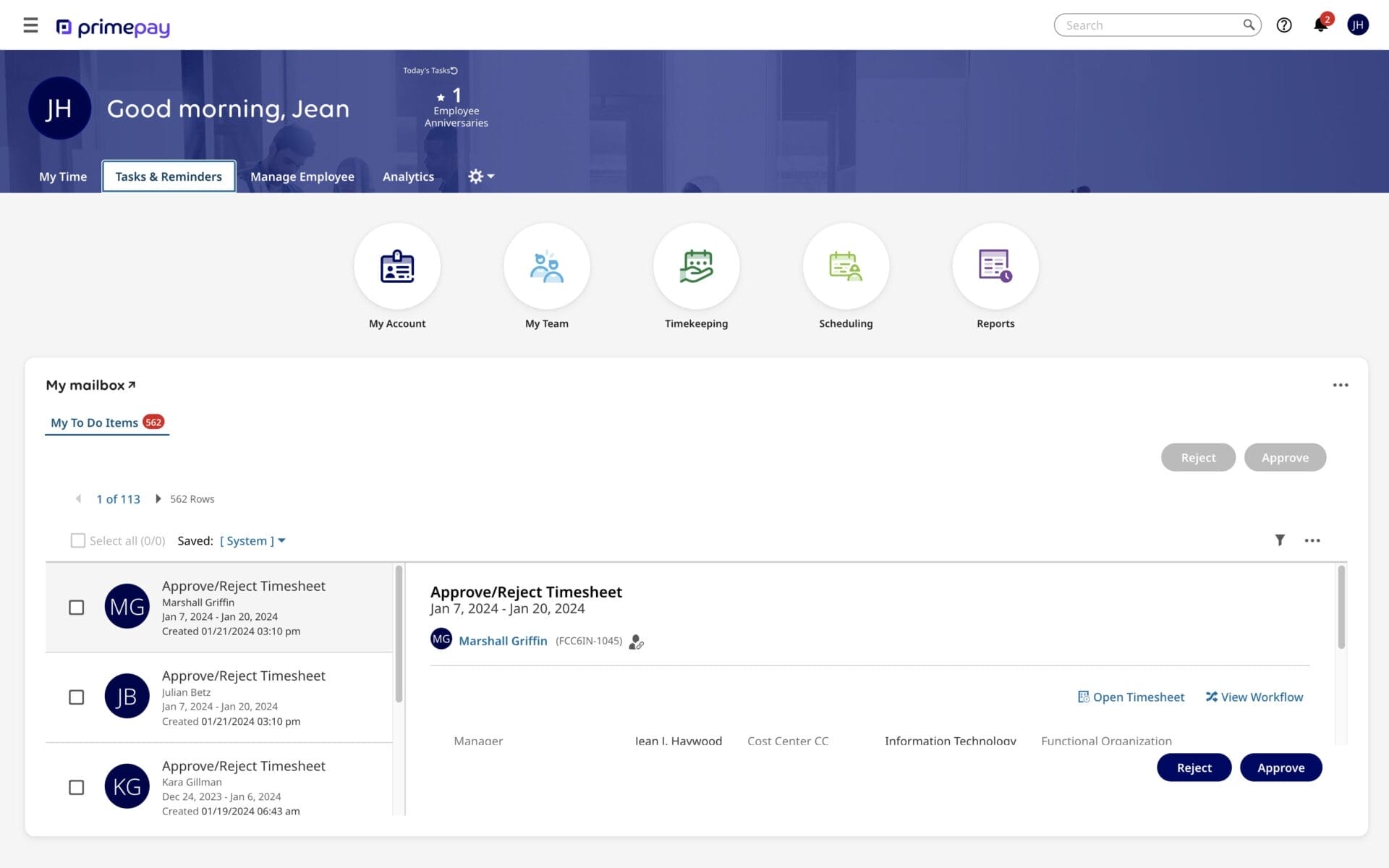
PrimePay – Manager Dashboard. Choose a time and attendance system that’s integrated with your payroll software and requires minimal lift to approve timesheets and analyze reports.
Once you have completed your setup, the focus shifts to execution. This is where your payroll system proves its value. While the first few payroll cycles may feel stressful, a consistent process will quickly make payroll management more routine and reliable.
Follow these steps each pay period to run payroll accurately and on time.
1. Calculate Hours Worked
Start by calculating the total hours worked by each employee during the pay period. This includes:
- Regular hours
- Overtime hours
- Paid time off, such as vacation or sick leave
Accuracy matters here. Even small errors in time tracking can lead to incorrect pay, which can affect employee trust and create compliance issues.
If possible, use a time and attendance system that integrates with your payroll software. This reduces manual entry and makes it easier to review and approve timesheets before you run payroll.
2. Calculate Gross Pay
Once hours are confirmed, calculate each employee’s gross pay. This is the total amount earned before any deductions.
For hourly employees, multiply hours worked by their hourly rate, including any overtime premiums. For salaried employees, divide their annual salary by the number of pay periods.
Be sure to include any additional earnings such as bonuses, commissions, or shift differentials.
3. Apply Payroll Deductions
After calculating gross pay, you’ll need to apply the necessary deductions. These typically include:
- Federal income tax withholding
- State and local income taxes, if applicable
- Social Security and Medicare taxes
- Employee benefits such as health insurance or retirement contributions
- Any wage garnishments or other required deductions
Be sure to stay compliant with tax regulations, as withholding errors can result in penalties, amended filings, and extra administrative work. Using payroll software or a provider can help ensure calculations stay current with changing tax rules.
4. Calculate Net Pay
Once you’ve deducted taxes and other withholdings, you’re left with the employee’s net pay, or the amount they’ll actually take home. You’ll issue this final figure to your employees via direct deposit, check, or other method.
At this stage, review payroll totals carefully. Look for any unusual changes, such as unexpected overtime or missing deductions. A quick review can catch errors before payments are issued.
5. Issue Payments
Next, distribute employee pay. Most businesses use direct deposit because it is fast, secure, and convenient. Other options include paper checks or payroll cards.
Timely payment is essential. Many states have strict rules about when employees must be paid, and late payroll can damage employee morale.
6. File and Deposit Payroll Taxes
Payroll taxes must be deposited and reported according to federal and state schedules. This step includes:
- Federal income tax withholdings
- Employer and employee portions of Social Security and Medicare
- State income taxes, where applicable
You will also need to file required forms, such as IRS Form 941 on a quarterly basis and Form W-2 annually.
7. Maintain Payroll Records
Accurate recordkeeping is a core part of payroll management. You should securely store records that document:
- Hours worked
- Pay rates and earnings
- Tax withholdings and deductions
- Payroll tax filings
Federal law generally requires payroll records to be kept for at least three years, though some states require longer retention. Organized records make audits, reporting, and internal reviews much easier.
8. Report New Hires
Finally, make sure you report any new hires to your state’s new hire reporting program. In most states, this must be done within a certain timeframe (usually within 20 days of hiring).
This rule helps states enforce child support orders and maintain accurate employment records. Missing this step can result in penalties, so it should be part of your standard onboarding process.
The Next Step: A Payroll Strategy
Once you know how to set up payroll and run payroll each pay period, the next step is to think more strategically. Payroll is not just an administrative task. It is a core business function that affects compliance, cash flow, employee satisfaction, and operational efficiency.
A payroll strategy is a defined approach to how your business manages payroll over time. It brings together your processes, systems, controls, and responsibilities into a consistent, documented framework. Instead of reacting to payroll each cycle, you are proactively managing it.
This matters more than many business owners realize, especially for small to midsize businesses. According to accountancy firm EY, 67% of organizations report having a formal payroll strategy in place. In other words, there’s widespread recognition that payroll has strategic as well as administrative implications. That’s because it touches on issues like employee recruitment, engagement, and retention.
A strong payroll strategy helps your business:
- Maintain compliance with changing tax and labor laws
- Reduce errors through standardized processes
- Improve visibility into payroll costs and data
- Support better decision-making with accurate reporting
- Scale payroll operations as your business grows
It also positions your team to take advantage of modern payroll tools. When payroll processes are clearly defined, it becomes easier to adopt technology that provides real-time data, automation, and performance tracking.
In short, payroll strategy turns a routine obligation into a controlled, efficient system that supports the broader goals of your business.
An Easier Way to Run Payroll
You can follow all of the steps in this guide and successfully manage payroll on your own. Many businesses do. But as your organization grows, payroll management becomes more complex, and the cost of errors increases.
That is why many employers choose to use payroll software or partner with a provider.
Modern payroll platforms help automate calculations, apply the correct tax withholdings, and handle filings on your behalf. This reduces manual work and lowers the risk of mistakes. It also creates a more consistent process, making it easier to run payroll accurately every pay period.
With a provider like PrimePay, you also gain access to onboarding support that helps you set up your payroll account correctly from the start. Employee data is reviewed for accuracy, and your payroll system is configured to align with your business needs and compliance requirements.
Beyond setup, ongoing support can help you navigate changing regulations, manage reporting, and maintain confidence in your payroll process.
At the end of the day, payroll is about more than just paying employees. It is about protecting your business, supporting your team, and using your time effectively as a leader. The right approach, the right tools, and the right provider can make all the difference.